Choosing the Right Surface for Your Artwork: Canvas, Board, or Paper?

 Canvas, Board, or Paper?

Choosing what to paint on shouldn’t be difficult. This easy guide helps you match your painting surface to your materials, budget, and creative style.
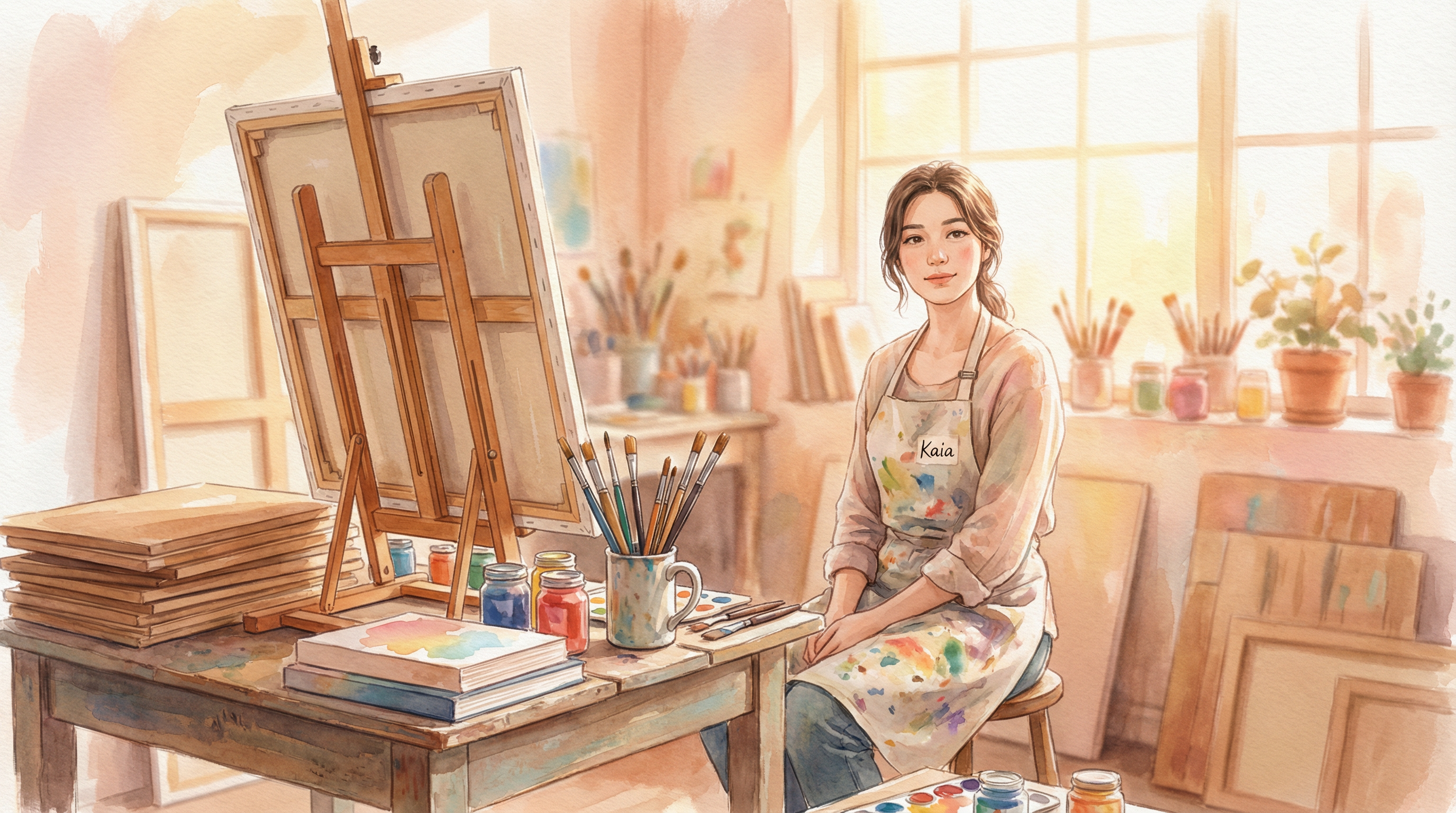
Kaia in artist studio surrounded by painting surfaces and brushes

Kaia exploring different painting surfaces and brushes in a cozy artist studio.

๐ŸŽจ Canvas – Classic and Versatile

Best for: Oil paints, acrylics, and mixed media

Canvas has been a favorite for centuries. Made of cotton or linen stretched over a wooden frame, it gives your artwork a traditional, professional feel.

  • Pros: Adds texture, light, and depth to paint strokes.
  • Cons: Needs priming with gesso; higher-quality linen can be pricey.
  • Best paints: Oil and acrylic — both bond beautifully with canvas fibers.

๐Ÿ–ผ️ Painting Boards – Durable and Detail-Friendly

Best for: Oils, acrylics, and gouache

Boards like wood panels, MDF, or canvas boards offer a smooth, steady surface perfect for detail work and precision painting.

  • Pros: Firm, easy to frame, ideal for layering and scraping techniques.
  • Cons: Heavier; may need sealing to prevent warping.
  • Best paints: Oils and acrylics for professional texture control.
Kaia is preparing her brushes with different surfaces like canvas, wood, and watercolor paper.

๐Ÿงป Paper – Affordable and Adaptable

Best for: Watercolors, gouache, pastel, and ink

Paper is flexible, wallet-friendly, and ideal for light mediums. Its surface texture varies — from smooth “hot press” to rough “cold press.”

  • Pros: Affordable, portable, and great for layered washes.
  • Cons: Less durable; may warp with heavy water or paint layers.
  • Best paints: Watercolors, ink, and pastel sticks that blend easily.

๐Ÿ’ฐ Pricing and Quality

SurfacePrice RangeDurabilityBest Mediums
Canvas$10–$40HighOil, Acrylic
Painting Board$5–$30HighOil, Acrylic, Gouache
Paper$1–$10ModerateWatercolor, Pastel, Ink

✨ Final Takeaway

Picking your surface is about what inspires you. Choose canvas for classic depth, board for precision, or paper for fluid expressiveness. The right surface makes your color, texture, and creativity shine — and most importantly, it makes painting easy and enjoyable.

Pin this: Choosing your painting surface made simple ๐ŸŽจ

Pin this: Choosing your painting surface made simple ๐ŸŽจ

๐Ÿ“Œ Save to Pinterest

© 2026 PrintingYourArt.com | Written by PrintingYourArt Editorial

Acrylic vs. Oil Paint: Differences, Pros and Cons, and How to Tell Them Apart

Kaia Lirien painting with oils and acrylics

Discover the key differences between acrylic and oil paints — from drying time and texture to how to properly layer and identify them. Learn which medium best suits your artistic vision.

Acrylics and oils are two of the most popular mediums for painters — both beautiful in their own right but vastly different in behavior, texture, and finish. This article explores their strengths and weaknesses, what makes each medium unique, and how to identify them in finished artwork.


The Timeless Debate: Acrylics or Oils?

Artists have long debated the virtues of acrylic versus oil paint. While both offer rich, luminous possibilities, they behave in dramatically different ways. Understanding these differences helps artists choose the right medium for their creative process and intended result.


1. Composition and Drying Time

Acrylic Paints:
Acrylics are water-based and made with pigment suspended in an acrylic polymer emulsion. Because water is the primary solvent, acrylics dry quickly — often within minutes — depending on thickness and humidity.

Oil Paints:
Oils use pigments mixed with drying oils such as linseed, walnut, or safflower oil. They dry slowly because the drying process is oxidative (they harden as they react with oxygen), which can take days, weeks, or even months.

Why It Matters:
The slow-drying nature of oils gives artists time to blend colors directly on the canvas and create smooth transitions — ideal for lifelike portraits or atmospheric landscapes. Acrylics, on the other hand, favor those who prefer layering, crisp edges, and faster results.


2. Layering and Drying Considerations

Acrylics:
Layers can be added once the paint feels dry, usually in minutes. There’s little risk of cracking or blending issues if you work too soon, making acrylics ideal for quick, spontaneous expression.

Oils:
Patience is key with oil painting. Each layer must be fully or mostly dry before applying the next. Failing to do so can cause cracking or dulling as the underlying layer dries at a different rate.

The “Fat Over Lean” Principle:
In oil painting, thicker or more oily layers (fat) must always be applied over thinner, faster-drying layers (lean). This ensures flexibility and prevents future cracking. It’s one of the most important structural rules in painting with oil.


3. Cleanup and Maintenance

Acrylics:
Cleanup is simple — soap and water are usually enough. Brushes should be washed before the paint dries, as dried acrylic forms a flexible but stubborn plastic film.

Oils:
Cleanup requires solvents like odorless mineral spirits or turpentine, followed by soap. Because oils don’t dry via evaporation, cleaned tools must be thoroughly wiped to remove residual oil and pigment.


4. Visual and Textural Differences

Acrylic Appearance:
Acrylics tend to have a flatter, more matte appearance unless finished with gloss medium or varnish. They also darken slightly when dry. Artists can mimic oil richness by adding mediums that extend working time or alter sheen.

Oil Appearance:
Oils are known for their luminous, buttery texture and natural depth. Light refracts differently through the oil binder, so colors appear richer and more unified.

How to Tell Them Apart:

  • Sheen: Oils often have a glossier surface.

  • Texture: Oils blend seamlessly, while acrylics reveal more distinct layer edges.

  • Age: Acrylics rarely yellow over time; oils may develop a warm tint as they age.


5. Pros and Cons Summary

Feature

Acrylic Paint

Oil Paint

Drying Time

Very fast (minutes to hours)

Very slow (days to months)

Cleanup

Easy, with water

Solvent-based, more effort

Texture & Finish

Matte to semi-gloss; can appear flat

Rich, glossy, and deep

Color Mixing

Must mix quickly before drying

Long blending time on canvas

Longevity

Highly stable, non-yellowing

Ages beautifully if preserved well

Layering Needs

Simple, minimal wait time

Must observe “fat over lean” for durability

Best For

Beginners, illustrators, quick workers

Realism, portraiture, classical painting


6. Choosing What’s Best for You

Your ideal medium depends on your temperament, technique, and intent:

  • If you love immediacy, vibrant color, and experimentation, acrylics are your friend.

  • If you enjoy subtlety, detail, and patience, oils reward your effort with unmatched richness.

Hybrid artists often combine both: starting with acrylic underpaintings (for speed) and finishing with oil glazes (for luminosity).


Final Thoughts

Both acrylics and oils have contributed masterpieces to art history. The key is understanding their nature: acrylics capture energy and modernity, while oils bring timeless warmth and texture. Mastering one — or both — will deepen your understanding of how color, light, and patience shape the art you create.


Keywords: acrylic vs oil paint, acrylic painting techniques, oil painting techniques, pros and cons of acrylics, fat over lean rule, oil layering, painting mediums comparison, drying time in art, tell acrylic from oil painting
Discover the key differences between acrylic and oil paints — from drying time and texture to how to properly layer and identify them. Learn which medium best suits your artistic vision.


The Roots of Color: A Southern Tale of Red, Blue, and Yellow

A cozy southern still-life featuring red, blue, and yellow pigments.

Discover the story of the three primary colors — red, blue, and yellow — told with southern charm. Learn their history, how they were made, and how light and shadow change their character.

The Beginning: When Color Came from the Earth

Long before paint came in shiny cans or digital screens shimmered with pigments, colors were made by hand. Folks down South — and across the world — would grind up bits of stone, clay, or plants. They’d boil berries or roots on stovetops, stirring like they were making Sunday jam.

That’s how red, blue, and yellow — the grand trio of all colors — came to life. These primaries are the kinfolk that give birth to every other hue, from grassy greens to royal purples. Each one carries a spirit, a temperament, and a story to tell.


Red: The Fire in the Heart

Red’s the bold one, full of spirit and sass. In olden days, folks made red from clay rich in iron or from crushed cochineal beetles — a tiny bug with a mighty bite of color.

Red shows up in Southern life everywhere: rust-colored barns baking in summer sun, fresh tomatoes shining in a basket, and that lipstick shade that says, “I got this.”

But red’s mood changes with light and shadow. Mix it with white, and it softens into pink — sweet and tender like a magnolia bloom. Add black, and it deepens into burgundy or maroon — the color of old wine, patience, and quiet pride.


Blue: The Quiet Soul

Blue don’t boast. It speaks slow, like an old river on a windless afternoon. Back in the day, indigo plants painted the South in fields of twilight blue. Folks would crush and ferment them into dye for clothing that carried the scent of hard work and warm nights.

Lighten blue with white, and you get airy sky colors — soft as morning light slipping through lace curtains. Darken it with black, and it becomes navy, midnight, or storm — the deep tones of denim worn by generations and the horizon before the rain.


Yellow: The Sunshine Maker

Yellow’s the life of the bunch — bright, easygoing, and always hummin’ a tune. Early pigments came from ochre, saffron blossoms, or clay baked golden by the sun.

It’s the color of cornbread drippin’ with honey, wildflowers dotting an open field, and that first slant of morning light through the kitchen window.

Mix it with white, and it turns to cream — gentle as butter on warm biscuits. Stir in black, and you’ll find mustard — baked-in warmth, sturdy and grounded, like old paint on a well-loved porch.


When Colors Meet

Here in the South, we know that family traits run strong — and when these colors mingle, something new is born.

  • Red and yellow make orange — bold as a summer sunset.

  • Blue and yellow give you green — the eternal song of life and growth.

  • Red and blue create purple — deep as twilight and full of mystery.

And just like Southern storytelling, every mix is a little unpredictable — rich with character, shaped by balance and light.


The Heart Behind the Hue

Colors aren’t just what we see; they’re what we feel. They shape our days, calm our nerves, and stir up memories. Red’s for passion and courage. Blue carries peace and promise. Yellow brings warmth and joy.

The old painters and homemakers who ground their colors by hand knew this well: color is a living thing, born of earth, light, and patience — just like all good Southern things.

So next time you watch a Texas sunrise stretch over golden fields, remember — it’s just red, blue, and yellow, tellin’ their story one shade at a time.


Author’s Note:
Written with a Southern heart and the belief that every color has a soul — if you just take the time to look.

Keywords: primary colors, color history, red blue yellow meaning, southern storytelling, color mixing, art and design

How to Become a Fine Art Painter and Build on Each Step of the Way


Artist painting


How to Become a Fine Art Painter and Build on Each Step of the Way

Published: January 24, 2026

Learn how to start your journey as a fine art painter from scratch. Discover the tools, techniques, and mindset you need to grow step by step—from your first brushstroke to developing your artistic style.


Introduction: Every Artist Starts with a First Brushstroke

Becoming a fine art painter isn’t about having instant talent—it’s about nurturing curiosity, patience, and a willingness to learn one layer at a time. Whether you’re an absolute beginner or returning to painting after years away, this guide will help you build your foundation and gain confidence step by step.


1. See Like an Artist—Practice Observation and Inspiration

Before you paint, start by noticing your world. Study how sunlight warms a wall, how colors dance at sunset, or how shadows curve across a mug. These quiet observations are what give art its soul.

Creative habit: Keep a sketchbook or notes app for quick doodles and color ideas. Everyday inspiration becomes your creative toolbox.


2. Keep Your Supplies Simple

You don’t need a lot to get started—just enough to create freely and confidently.

Basic starter kit:

  • Acrylic paints (primary set: red, blue, yellow, white, black)

  • A few brushes: small round, medium flat, and large wash

  • Canvas board or heavyweight paper

  • Palette, rag, and jar for water

  • Table easel (optional, but comfortable for longer sessions)

The goal is to paint often, not perfectly.


3. Learn the Core Fundamentals

Every painting rests on a few key building blocks:

  • Color: Understand warm vs. cool tones and complementary contrasts.

  • Composition: Arrange your subject to guide the viewer’s eye.

  • Light and shadow: Add depth and realism.

  • Texture: Experiment with brush types and pressure to create variety.

Try this: Practice painting simple still‑lifes—a fruit bowl or a ceramic mug—to explore light, shape, and color blending.


4. Build a Painting Routine

Like exercise or gardening, painting improves through steady practice. You don’t need hours—twenty minutes daily or several short sessions weekly work wonders. Over time, your hand steadies, and your confidence grows.

Ideas to stay motivated:

  • Join a “30‑day painting challenge.”

  • Choose a theme for a week (like nature, reflections, or household objects).

  • Reward your effort, not just results.


5. Study Great Artists—Then Create Your Own Voice

Examine the techniques of master painters—Monet, Degas, Kahlo, O’Keeffe, Hopper—and study how they used color, light, and emotion. Then, reinterpret what inspires you into your own expression rather than direct imitation.

Let curiosity, not comparison, guide your learning.


6. Explore and Evolve Your Personal Style

Over time, you’ll notice themes and colors that naturally recur in your work. This is your developing signature. Experiment with mixed media, texture, or different surfaces. Growth in art is about evolution, not arrival.

Tip: Photograph your older pieces periodically. Reviewing them helps you see progress more clearly than memory alone.


7. Connect with the Art Community

Community adds encouragement and growth. Look for local workshops, open studios, or online art groups where you can share, learn, and gain feedback in a positive space.

Pro tip: Join a local art guild or weekend paint‑along group—it’s both motivating and social.


8. Keep Learning—Brushstroke by Brushstroke

Every work, good or bad, teaches something. Enjoy the learning curve. Fine art isn’t about perfection—it’s about expression.

Reflect often:

  • What worked well in this piece?

  • Which part challenged me?

  • What do I want to explore next?

Keep painting, stay patient, and trust that progress builds naturally—one layer, one lesson, one canvas at a time.


Conclusion: The Joy Is in the Journey

Every artist begins with a blank canvas and a spark of curiosity. As you practice day by day, you’ll watch that spark grow into skill and self‑expression. The best part? The more you create, the more inspired you become.

So, pick up your brush today. Your masterpiece starts now.


Keywords

beginner fine art painter, learn painting basics, art for beginners, how to start painting, painting practice tips, painting techniques, how to develop your art style